
About Eric Maisel
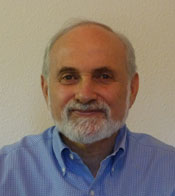 A Life Devoted to Creativity, Meaning, and the Human Experience
For more than forty years, I have been thinking, writing, teaching, and working with people around some of the central challenges of being human: how we create meaning, how we make choices, how we live a creative life, how we understand our own minds, how we deal with difficulty and disappointment, and how we become the person we intend to be.
That work has taken many forms. I have been a family therapist, creativity coach, teacher, trainer, author, columnist, speaker, and advocate for more humane approaches to emotional distress. I have written more than sixty books on creativity, meaning, life purpose, mental health, coaching, relationships, and the challenges of contemporary life.
But beneath all of those different activities has been one abiding question:
How do we live well, authentically, and purposefully in a world that does not hand us easy answers?
That question has become the thread connecting virtually everything I do.
From Psychology to the Human Experience
I was born in the Bronx, grew up in Brooklyn, and attended Stuyvesant High School in Manhattan. After serving in the Army, I studied philosophy at the University of Oregon, an early indication of where my interests would eventually lead me.
I subsequently earned a master’s degree in creative writing from San Francisco State University and spent years writing fiction, ghostwriting, and trying to understand from the inside what it means to create and to attempt to make a life in the arts.
Later, I returned to school to study psychology, eventually earning a doctorate in counseling psychology and becoming a licensed family therapist in California. I chose to specialize in working with writers, visual artists, musicians, actors, performers, and other creative people.
That work changed the direction of my professional life.
Again and again, I saw that the difficulties people brought into the consulting room could not adequately be understood as symptoms of mental disorders. They were often problems of meaning, identity, relationship, livelihood, ambition, disappointment, freedom, choice, circumstance, personality, and the realities of being human.
That realization eventually led me away from the medical model of mental health and toward what has become a decades-long effort to articulate more humane and useful ways of understanding human difficulty.
It also led me from psychotherapy to coaching.
Creativity and the Creative Life
I became one of the early developers of creativity coaching and have spent decades working with writers, visual artists, performers, entrepreneurs, and other creative people around the world.
My books on creativity include Fearless Creating, Coaching the Artist Within, The Van Gogh Blues, Mastering Creative Anxiety, Creative Recovery, Making Your Creative Mark, The Power of Daily Practice, A Writer’s Paris, A Writer’s San Francisco, and many others.
My interest has never been only in how people create. I have been equally interested in how a person manages the demands of a creative life.
Creative people encounter a distinctive array of challenges: self-doubt, rejection, marketplace pressures, isolation, creative blocks, anxiety, perfectionism, questions of identity and ambition, difficulties sustaining a practice, and the ongoing challenge of making meaning through work that the world may or may not reward.
Those concerns eventually led me to help create the profession of creativity coaching, to train creativity coaches internationally, and more recently to serve as president of the International Association of Creative and Performing Artists (IACPA), an organization devoted to supporting the lives and work of creative people worldwide.
Meaning, Purpose, and the Existential Life
Running alongside my work on creativity has been a second major strand of my thinking: the problem of meaning.
I do not believe that meaning is something we discover waiting for us in the universe. I believe that we make meaning, invest in meaning, and experience meaning—and that maintaining that experience is one of the central responsibilities and challenges of human life.
This perspective has informed books including The Van Gogh Blues, Mastering Creative Anxiety, Rethinking Depression, Life Purpose Boot Camp, Overcoming Your Difficult Family, Choose Your Life Purposes, Existential Wellness Coaching, The Reenchantment of Meaning, and Existential Nomads.
Over time, I have moved from the familiar idea that each of us should discover our single “life purpose” toward a very different proposition: that we choose and pursue multiple life purposes, that our purposes change over time, and that we are obliged to keep deciding what matters to us.
That challenge has become even more urgent in contemporary life.
Many of the identities, institutions, roles, communities, beliefs, and traditions that once told people who they were and how they were supposed to live have weakened or disappeared. Increasing numbers of us must invent and reinvent ourselves as we go.
I call us existential nomads.
We may experience that condition as freedom, anxiety, possibility, disorientation—or all four at once. But increasingly, it is simply part of what it means to be a contemporary human being.
Rethinking Mental Health
A third major strand of my work has involved questioning the dominant mental health paradigm.
For many years I wrote the Rethinking Mental Health blog for Psychology Today, and I have written and edited extensively in the fields of critical psychology and critical psychiatry. I serve as lead editor of the Ethics International Press Critical Psychology and Critical Psychiatry series, which brings together authors challenging conventional assumptions about diagnosis, treatment, distress, and human difference.
My position is not that human beings do not suffer. We plainly do.
My concern is with the assumption that emotional and psychological difficulties are necessarily best understood as symptoms of mental disorders.
Human beings become despairing. They experience anxiety. They become obsessed, confused, enraged, alienated, addicted, defeated, and overwhelmed. They encounter trauma, loss, loneliness, difficult relationships, economic hardship, family authoritarianism, crises of meaning, and the consequences of their own choices and personalities.
These experiences deserve to be taken seriously.
But taking them seriously does not require turning every form of suffering into a disease.
Much of my work has therefore focused on what becomes possible when we replace the question “What disorder does this person have?” with the much larger question “What is going on in this person’s life and experience?”
A New Kind of Helper
That question has led naturally to my newest work: the development of the Human Experience Specialist.
The Human Experience Specialist, or HES, represents my attempt to bring together decades of thinking about creativity, meaning, psychology, coaching, personality, relationships, and human difficulty into a new model of helping.
An HES does not begin with diagnosis. An HES begins with the person.
What is happening? What matters? What hurts? What has been lost? What needs to change? What choices are available? What realities must be faced? What possibilities have not yet been considered?
The stock-in-trade of the Human Experience Specialist is not diagnosis but wisdom: knowledge of human nature, skill in understanding another person, the ability to ask useful questions, and a repertoire of practical tactics for helping someone move forward.
I see the HES model as both a continuation of the critical psychology and critical psychiatry traditions and as an effort to move beyond critique toward a practical alternative.
Intelligence, Families, and the Other Challenges We Carry
My work has also taken me into other areas of the human experience.
In books including Why Smart People Hurt and Why Smart Teens Hurt, I have explored the particular challenges that can accompany intelligence: overthinking, existential questioning, boredom, perfectionism, alienation, and the difficulty of finding environments equal to one’s mind.
In Parents Who Bully and Helping Survivors of Authoritarian Parents, Siblings, and Partners, I have examined authoritarianism where it is often overlooked: inside the family. Authoritarian dynamics do not occur only in governments and institutions. They can shape childhoods, marriages, sibling relationships, and entire family systems.
And throughout my work I have returned to questions of worldview: what we believe, why we believe it, what happens when inherited beliefs no longer persuade us, and how we construct an ethical life without relying on supernatural guarantees.
These may appear to be separate subjects. To me, they belong together.
They are all aspects of the difficult art of being human.
Writing, Teaching, and Working with People
Over the course of my career, I have worked with thousands of individuals and trained coaches around the world. I have taught at universities, institutes, conferences, arts organizations, and professional organizations and have presented workshops and keynotes in the United States, Canada, Europe, and elsewhere.
My books have been published by major and independent publishers and translated into numerous languages. My writing has appeared in a wide range of publications, and I continue to write regularly about creativity, meaning, mental health, the arts, and contemporary life.
I also continue to work directly with people.
I work with individuals as a Human Experience Specialist, with writers and artists as a creativity coach, with nonfiction authors developing important books, and with organizations looking for speakers, workshops, and trainings. I have also created certification programs in creativity coaching, existential wellness coaching, relationship coaching, and the Human Experience Specialist approach.
Writing matters enormously to me. Teaching matters. Developing ideas matters.
But so does sitting across from one person and helping that person think more clearly about the life they are living.
The Work Continues
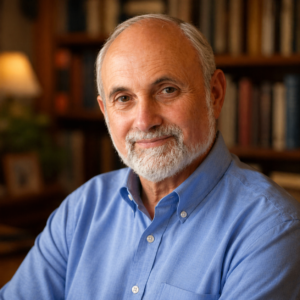 At this point in my life, I find that the different strands of my work have increasingly converged.
Creativity is not separate from meaning. Meaning is not separate from identity. Identity is not separate from circumstance. Emotional distress is not separate from the life a person is living. Helping someone is not primarily about applying a label or a technique. It is about understanding as much as we can about what it means to be this particular human being in this particular situation.
That is the territory I continue to explore.
My aim has never been to provide a single system that explains everything. Human beings are too complicated for that.
Instead, I have tried to develop ideas, practices, and ways of thinking that help us meet our lives with greater clarity, courage, creativity, responsibility, and humanity.
There is still a great deal to think about.
And a great deal of work to do.